Showing posts with label Africa. Show all posts

Of foreign adoptions and the Day of the African Child

Tuesday, June 16, 2009

Today, its 16th June, a day in which we celebrate the life of an African child. Originating from remembering the massacres of the innocent children in Soweto, South Africa in 1976, we now reflect on the plight of the African child. Indeed we now reflect on the need of the African child to have access to quality education, health, protection against abuse etc. This is because the future of our beautiful African continent lies in the hands of the African child.
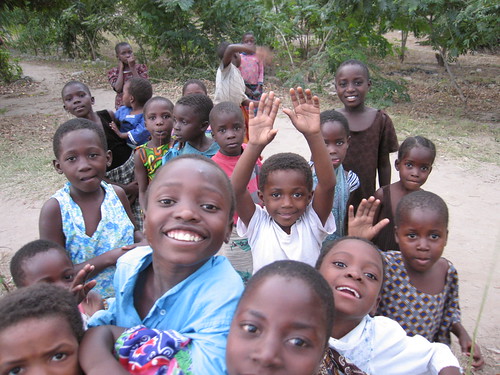

Some kids on Chizumulu Island on Lake Malawi in Malawi!


In this post, I would like to share my thoughts of having western 'celebrities' come to Africa to adopt our orphans and vulnerable children. In particular, I would like to refer to a case in which Madonna has been allowed to adopt another child in Malawi. I do not wish to hide that I am one of the many Malawians who are not happy with this decision.

Imagine if all our orphaned children were put up for foreign adoption, what would become of their destiny and indeed the destiny of Africa at large? Obviously as Africans we have our own culture and traditions that can not just simply be ignored for material prosperity in a foreign adopted home. Much as we appreciate that a child needs material care, we can also not ignore the need to protect the African identity of the child. If at all, one is interested in the welfare of African children, the solution is not to just pick one or two kids out of the many thousands of orphaned children out there! What is wrong with helping the kids while the kids are right here in Africa like what Oprah Winfrey does? This idea of 'fishing out a single kid' out of Africa as what Madonna is doing can simply be rated as 'media charity'.

A question then pops up in my mind! Is it that as Africans we have failed to take care of our African children? Maybe we can say so? How? It is very surprising that these kids being put up for foreign adoption are being found in orphanages. If not mistaken, this orpanage syndrome is a new phenomenon across Africa. Why do I say so? Normally, in an African communalistic setting, one is supposed to take care of relatives children as if they are your own children. So even if a parent dies, the relatives of the deceased are supposed to take care of the children. But what do we see now? Relatives quickly send the orphaned children to orphanages. This is why there are so many children in the orphanages now.

Where has our African Umunthu spirit gone? Is this a sign that African cultural values are being eroded? In addition to this, we should go back to our African traditional values that always insist that those who are mature enough are the ones who should get married and have children who they can manage to take care of. Otherwise, we shall keep on having problems of children who lack parental care.

Read more...

Facebook in Kiswahili is a great idea!

Monday, June 15, 2009


Just read on BBC news website that a Kiswahili version of Facebook has been released! Honestly speaking, I am thrilled. Long at last, African languages are also gaining prominence as communication medium in the cyber world. I do not know KiSwahili, but this idea is just great! At least to me... What about you?

Read more...

A decade of the Internet in Malawi

Tuesday, December 16, 2008

As Malawi joins the rest of Africa in commemorating the 2008 ICT week, this should also be time for reflection on the state of information and communication technologies (ICTs) in the country. This article attempts to chronicle the history of the Internet in Malawi as well as current challenges to Internet accessibility in Malawi.


The early 1990’s saw the birth of email services in Malawi. This was in the Physics Department of Chancellor College of the University of Malawi through the UNIMA E-Net project under the leadership of Dr Paulos Nyirenda. The UNIMA E-Net project was providing email services using FidoNet technology because that time around the Internet was not yet introduced in Malawi.

FidoNet is an electronic mail network with over 15,000 mail nodes world wide. FidoNet is independent of currently the most popular global network of computers known as the Internet. Over FidoNet, users can send private email messages to each other as well as share files. Although FidoNet computers can also get connected to the Internet, the popularity of the Internet has greatly diminished worldwide usage of other public computer networks like FidoNet. Malawi indeed also joined the bandwagon in adopting the Internet in 1997.

The UNIMA E-Net project provided email and internet services not only to the Chancellor College campus but also to surrounding areas in Zomba. Services within Chancellor College campus were mainly provided through a Local Area Network (LAN). Surrounding areas accessed UNIMA E-Net services through dial-ups over phone lines. Having worked at the UNIMA E-Net project in the later years of its inception, I can still remember how it was becoming difficult to satisfy demand for Internet services at Chancellor College and indeed to other surrounding areas of Zomba.

The first private Internet Service Provider (ISP) in the country, Malawi Net, was formed in 1997. In 1999, Malawi SDNP, a semi-government owned and UNDP funded ISP, was formed. However, the new millennium saw the formation of new private ISPs in Malawi like Africa-Online and later on Globe Internet Company. The fixed phone provider, Malawi Telecommunications Limited (MTL), has also recently joined the bandwagon of Internet Service Providers in the country.


Malawi SDNP has played a significant role in the development and accessibility of the Internet in Malawi. For example, internet access in University of Malawi colleges was introduced through the Malawi SDNP. Malawi SDNP was responsible for providing Internet services to the Malawi Polytechnic, Kamuzu College of Nursing, Bunda College of Agriculture and also Mzuzu University. This is addition to providing internet services to private organizations and individuals in the country.

Other private ISPs have also contributed greatly to Internet accessibility in the country by providing services like wireless Internet. A proliferation of wi-fi hotspots in urban areas of the country bears testimony to this development. It is also now possible to access wireless broadband Internet in some residential areas in some urban areas of the country. In addition, it is also now possible to access Internet services through mobile phones.


Despite the gains that have been made in the provision of Internet services in Malawi by different stakeholders in the last decade, there are many challenges that need to be addressed. One of the major challenges is the prohibitive cost for one to access internet services in Malawi. However, it is important to note that high costs to Internet access in Malawi are just symptomatic of the many challenges Internet Service Providers in the country face.

One of the major challenges facing internet service providers in Malawi is the lack of a local Internet Exchange Point (IXP) in our country. An IXP is physical infrastructure that allows different Internet Service Providers to exchange Internet traffic between their autonomous systems by means of mutual peering agreements. IXPs are typically used by ISPs to reduce dependency on their respective upstream providers hence improving cost savings, data transfer efficiency and fault-tolerance. For example, here in Malawi, an email message sent from a Malawi Net address to a Malawi SDNP address can not be sent directly to Malawi SDNP yet both of these ISPs are right here in Malawi. Instead the email message will have to go to an upstream service provider for Malawi Net and then the message has to be routed to the upstream service provider for Malawi SDNP which will in turn route the message to Malawi SDNP servers in Blantyre. It is important to note that both of these upstream service providers are usually outside Africa. This means that data which was supposed to be exchanged locally within Malawi in Africa has to pass through Europe or North America where these Internet upstream providers are based. This is unnecessary wastage of upstream bandwidth since our ISPs in Malawi may unnecessarily use upstream bandwidth for traffic which can typically be routed directly amongst them.

Another challenge in accessing Internet services in the country is the high cost of using the .mw domain. Currently Malawi SDNP administers the .mw domain on behalf of the Malawi government. For any patriotic Malawian, it is very necessary to have our own email addresses and websites to be using the .mw domain. However, this is not the case. We normally see .com and .net domains being in use by many Malawian companies and individuals. This is because these foreign domain names are cheaper to acquire than our own .mw domain. As an example, a good number of Malawians now have blogs on the world-wide web (WWW) but very few are using the .mw domain on their blog addresses. In addition to this, how many Malawians can afford to have .mw email addresses? Because it is expensive to have our email addresses with our own .mw domain, we now see that many Malawians use yahoo.com, gmail.com and other foreign email addresses. This has a financial implication in that accessing mail using these email addresses will lead one to use upstream bandwidth since email servers for these email addresses are outside Africa. This scenario is not only specific to Malawi but to many African countries because of lack of internet infrastructure.


Another major challenge is to bring ICT services, the Internet in particular, to rural areas of Malawi. Currently ICT services in the country are concentrated in urban areas. For example, it is easy to find Internet cafes in most urban areas. This is not the case in most rural areas. Obviously lack of necessary infrastructure like electricity and telephony services are contributing to this state of affairs. However, the Minister of Information, Mrs Patricia Kaliati, deserves special mention for her vigorous advocacy in encouraging ICT service providers to take their services to rural areas. Since 80% of Malawians live in rural areas, it is very necessary that this population also benefit from ICTs for their socio-economic development.

Finally, the development of an optic fiber network in the country will obviously lead to improved telecommunication services in the country. With the development of the submarine optic fiber Internet backbone along the eastern African coast of the Indian Ocean, many African countries stand to benefit from this NEPAD initiative. I look forward to the day when our optic fiber network in Malawi will get connected to this submarine Internet backbone because it is only when this happens that we will say bye to expensive VSAT links.

*** The author, Bennett Kankuzi, is a computer scientist/software engineer based in Blantyre, Malawi ****

Read more...

Yes, Nyamilandu is right! English Premier League fans in Malawi are hypocrites

Tuesday, August 26, 2008

The President of the Football Associaton of Malawi, Walter Nyamilandu, was quoted in the press (Daily Times, 25/08/2008) as describing English Premier League fans in Malawi as hypocrites for not patronizing local football matches. Instead they zealously get glued to their TVs to watch English premiership matches.

On the other hand, local TNM Super League matches are played on almost empty stadiums. These empty stadiums mean that local teams are not generating enough revenue to sustain themselves. Should we then wonder about dwindling standards of football among local teams in Malawi? Surprisingly, it is these very same English Premiership zealots that always complain about the sub-standard performance among local teams. Yes, as Nyamilandu put it, this is a clear case of pharisaic hypocrisy.


A view of the Chichiri stadium at a distance.
Note the construction works of the Chipembere
Highway in the background.
Photo credit: Bennett Kankuzi (28/08/2008)

Our obsession with “things foreign” in Malawi is well documented. Zambian music is now being played on almost all radio stations while some of our best local talent is rarely heard on our own radio stations. Going to football, there is even a radio station that has gone to the extent of making live radio commentaries as English Premiership matches are played. Yes, Star FM does this! My foot!

What about sports news on radio stations? This is dominated by “Man U this” and “Chelsea that”… Even other sporting disciplines like netball, basketball, etc rarely get any coverage. So, some radio stations are also greatly contributing to this unpatriotic attitude towards local football in Malawi. However, there are some radio stations which have to be commended for promoting local football in their sports coverage: MBC Radio 1, Zodiak Broadcasting Station and to some extent MIJ FM. On these radio stations, you are assured of knowing about local match fixtures and results. Its soothing to hear of fixtures like Makande Estate vs Liwonde Medicals, etc

Lets come to conversations about football among the “affluent”. Its all about English Premiership teams and players. There are those guys that will tell you the nitty-gritties of English Premiership football but will openly tell you that they have nothing to do with local football. Some would even go to the extent that they do not have any team they support in the local TNM Super League. Yet they vehemently support Liverpool, Arsenal, Manchester United and others. And sometimes discussing local football among these guys risks one to be labeled as primitive or “wachimidzi”. You have to talk about these “foreign teams” to be classified as affluent.

To me this is not very surprising. This is because our education systems across Africa indirectly teach us to “worship things foreign”. Mental colonialism manifests itself even among the so called educated people when they constantly try to detach themselves from local things. As Bob Marley said; we need to emancipate ourselves from mental slavery. Africa in general shall develop to her full potential only when her people are emancipated mentally.

Coming back to football. The question then remains: how can local football develop when we perpetually shun to support it. Definitely the FAM President is very right in calling a spade a spade. Others may not swallow the bitter pill easily. Malawians, lets learn to be patriotic. Malawi will be developed by Malawians and no-one else. Of course do not remind me of what Catherine Chikwakwa wanted to do by trying to ply her trade for another country!

Read more...

Why African countries need to embrace science vigorously

Wednesday, May 14, 2008

Lets start with a few facts: First, all developed countries are advanced in technology. Second, science and mathematics are cornerstones of modern technology.
Third, there can not be industrialization without advancing in technology.

Africa, is the 'poorest' continent in the world. This is despite the fact that the continent is rich in natural resources like minerals, cultivable land, massive fresh water bodies, a mostly tropic climate etc. What lacks is the means to transform these resources into products that can be used by her people. According to the International Technology Education Association, technology is defined as "how people modify the natural world to suit their own purposes". Based on this definition, we can see that technology enables human beings to transform natural resources into products that can enhance their lives. Imagine a car, a ubiquitous example of products of technology. A car is mostly made from metal. And we know that metals are extracted from minerals which are natural resources. But what do we see? Each continent except Africa has produced its own car models but Africa as a continent is yet to produce its own car model. America has Ford, Jeep etc. Europe has Mercedes Benz, Land Rover, Fiat etc. Asia has Tata (from the Indians), Hyundai (Koreans), GWM (from the Chinese), Toyota and Mitsubishi (from the Japanese). Just to mention a few! Is something wrong with us in the African continent?

Let us take the example of the Japanese. In 1910, Japan was a very poor country. After their defeat in World War II, the Japanese concentrated on nation reconstruction through a process of industrialization. With few natural natural resources at their disposal, the Japanese borrowed technology from the industrialized Western countries and indeed later own developed their own technolgies to become one of the most industrialized countries by 1970. The Japanese have remained prosperous ever since. They are no longer scorned as the "little Japs". What do we also see from the new economic giant China? By importing natural resources from resource rich areas like African countries, China is becoming one of the leading countries in terms of economic growth through a process of rapid industrialization.

Is it a coincidence that the Japanese (and indeed all developed countries) are also advanced in science and mathematics? I do not think so. It is a fact that one cannot develop any modern technologies without any deeper scientific understanding. Science can be practical or theoretical. All are very necessary for development of modern technology. For example, the Internet which has revolutionized modern communication has its origins from the scientific community. It is therefore my opinion, that the youth in all African countries should at all cost be encouraged to pursue subjects in Science and Mathematics. I hope I am not being misunderstood as condemning or looking down on other disciplines.


Can solar technologies help in generating
electricity in most African countries?

Yes, Africa at large has a very sad history of exploitation in form of slavery and colonialism. But we need to challenge our status quo and look up to the future with hope so that one day we shall graduate from the state of being a continent with a begging bowl. We need not to dwell in the past but rather look ahead.

To finish this post, I will give an example of Malawi. In the past year or so, vast deposits of uranium and other minerals have been discovered in Malawi and are in the process of being exploited. But what do we see? The uranium mined will be exported to developed countries for nuclear power generation. Yet, Malawi currently struggles to meet its energy demands. Its hydro-electric power stations (Nkula, Kapichira and Wovwe) can not produce enough electricity. With the energy demand in the whole of Southern Africa, Malawi could have also found potential to export energy generated from nuclear power to neighbouring countries. But, clearly Malawi does not have the technological know-how of nuclear power generation, nor does she have the financial capital to build a nuclear power station.

Sidenote:
This post was inspired by my readings of the book entitled "The Struggle for Economic Development: Readings in Problems and Policies", edited by Michael P. Todaro and published by Longman.

Read more...

Malawi and a Green Revolution in Africa?

Wednesday, May 07, 2008

Here are some of the articles that I have been collecting on Malawi and the debatable topic of a possible green revolution in Africa. With rising global food prices, food production is becoming a very big global issue as the world tries to find a solution to this crisis.


  1. How the rich world can help Africa help itself (Financial Times)
  2. Africa green revolution possible - Prof. Jeffrey Sachs (PSD Blog - World Bank group)
  3. Lessons from Malawi Food Policy (Cambridge Forecast Group blog)
  4. Dealing with Global Food Prices (International Herald Tribune)
  5. Malawi's farming revolution sets the pace in Africa (The Independent - UK)
  6. Sachs to EU: Food Aid Won't Solve Crisis (BusinessWeek)
  7. A Green Revolution for Africa by Kofi Annan (New Scientist - 07 May 2008)
  8. Small can be Beautiful (Inter Press Service - 07 May 2008)
  9. Overlooked in the global food crisis: A problem with dirt (Associated Press - 08 May 2008)

Read more...

Reflections on the Zimbabwe issue

Thursday, April 10, 2008

Brendan O’Neill, a renowned liberal British journalist, in an article on spiked presents a thought provoking and balanced view on the current contentious issue of Zimbabwe.

You may check the article at spiked-online.com

Read more...

The Kitchen Girl III

Tuesday, March 25, 2008

In almost every household of middle-income and upper-income families in Africa (and I suppose even in other parts of the world), they usually employ a houseworker. My opinion is that usually these workers are not treated fairly by their employers. The Kitchen Girl III is a reflective poem, by renowned Namibian poet Kavevangua Kahengua, who tries to portray the thoughts of a houseworker and in this particular case a "Kitchen Girl". It remains one of my favourite poems since I am a person who advocates for social-justice for the down-trodden. The poem goes on as follows:

The Kitchen Girl III

I am the kitchen girl
Like a cock
I am the first one to get up
At twilight I dare walk the path
That leads me to my masters' house
The aroma of the breakfast I prepare
Wakes up my masters from comfort
Here I toil till dusk
From Sunday to Monday
They say God hears prayers
Even from the kitchen

I am the kitchen girl
When my masters sit around
The table to enjoy the fruit
Of my sweet sweat
I am on my feet in the kitchen
Clattering of plates and spoons
Unending

I am the kitchen girl
The bank lady
Has just snatched my boyfriend
"How dare you touch my man?"
Twisting her red painted lips
She spat in my face

I am the kitchen girl
The Revised Labour Law III
Has omitted my occupation
They say the ommission is minor
After all, I was told
Minimum wages rule doesn't
Apply to kitchen chores
I am the kitchen girl

Copyright notice: Used with permission from the author. All rights reserved to the author, Kavevangua Kahengua. This poem appears in a book by the author entitled "Dreams" which is published by Gamsberg Macmillan Publishers Ltd, Windhoek, Namibia. ISBN: 99916-0-389-1

Read more...

A review of Malawian music on the Voice of America (VoA)

Wednesday, February 27, 2008

Matthew LaVoie of the Voice of America blogs about the journey of Malawi music from the 1960's to present. He starts his post by writing:

Nestled between Zambia, Tanzania and Mozambique; Malawi has earned its name as the 'warm heart of Africa'. And 'warm' is precisely the adjective I would use to describe Malawian music. There is sunny optimism in much of the Malawian music I've heard and after a grim weekend of cold, rain and snow here in Washington D.C., I figured I'd warm myself with a few Malawian recordings from our collection...


Read the whole review at http://www.voanews.com/ and be sure to dance to some of the tracks posted there. I am using Mozilla Firefox and am able to play the music there. My favourite song is 'Patricia' by Robert Fumulani and Likhubula River Dance Band. The song reminds me of my childhood days in the 1980s and of course the song is very nice. The lead guitar in the song is so distinctive and is blending very well with the bass etc. Guess what? Am literally jiving right now (celebrating our African heritage!)...Hahaha! Mixing business with pleasure. Malawi moto...!!!

Read more...

An alternative view of Malawi (part I)

Tuesday, February 26, 2008


This is the undulating Nyika National Park in Northern Malawi...


Summer animal watching in Nyika National Park in northern Malawi


Watching elephants in Vwaza Marsh Game Reserve in northern Malawi


On Zomba Plateau in southern Malawi...


Ku Chawe Inn on Zomba Plateau in southern Malawi


ALL PHOTOS COURTESY OF WWW.MALAWI-TRAVEL.COM

Read more...

The challenges of doing academic research in Africa

Monday, February 11, 2008

Update to this post (25/09/2015)
====

My PhD thesis defence was held on 28th August 2015 at 12 noon at the University of Eastern Finland School of Computing in the Louhela Auditorium, Joensuu Science Park in Joensuu, Finland. A summary of my PhD thesis is at http://bkankuzi.blogspot.com/2015/09/a-summary-of-my-phd-thesis-in-not-so.html

====
Working as an academic in a university in Africa can be a challenging task. It really requires a spirit of service to a nation, otherwise one easily gets frustrated by the impediments that he faces as he/she tries to discharge his daily duties.

One of the duties of an academic is to conduct research in their area of interest and specialization. Well, finding equipment for doing research is in itself a big huddle in most African universities. Apart from this, there is the daunting task of trying to disseminate your research findings in international conferences.

By this I mean, getting your research paper accepted for some international conference may bring joy to the researcher. BUT, wait a minute, the researcher would have to fund from his own pocket for expenses like conference registration fees, transport, accommodation and other associated costs.

This in itself is a stab in the back of an African researcher, because normally host institutions do not have funds for these expenses. This is because most universities in Africa are funded by their governments and definitely the funding is never enough. Of course its understandable since the governments have "priorities within priorities" in their national budgets. The governments have to fight for national food security, clean water, infrastructure development etc for the masses and funding academic research would never make it into the priority list.

However, this situation might lead others to conclude that there is no academic research being done in Africa which is not necessarily true. Unfortunately, world university rankings take research publications into account. So you better not be surprised to see many African universities not faring well in the rankings!

Read more...

A first-hand witness on stereotypes about Africa

Friday, February 08, 2008

I stumbled on this blog post by Ryan Price, a missionary in Malawi, who writes honestly about stereotypes some people have about the continent of Africa. This being one of the themes of my blog, I decided to feature it for you esteemed blog readers. Ryan opens his blog post by writing:

It seems like more than any other place on earth, Africa has more mystery, depth and stereotypes.

The more and more I talk to people about my experiences in Malawi, I frequently hear something like... "Wait... but I always thought..."


Please read on this eye-opening post at his blog: Hope from Malawi

Read more...

Qatari firm to build fuel storage facility and pipelines in Malawi

Tuesday, January 22, 2008

I think this is another must-share article with esteemed blog readers:

Article source: The Peninsula (Qatari English daily)
Date: 22nd January, 2008

A Qatari firm will be building a fuel storage facility and setting up pipelines in the landlocked African nation of Malawi, which borders Mozambique, [Tanzania] and Zambia.

To cement the deal with Venessia Petroleum, three ministers from the African country are here to chalk out the details of the project which is valued at $140m to $150m and will take 36 months to complete, according to S Gauhar Ali Zaidi, the company's general manager.

The ministers, who arrived yesterday, are Mohammed Sidik Mia, Minister of Irrigation and Water Development; H F Chimuntha Banda, Minister of Energy and Mines and Goodall E Gondwe, Minister of Finance.

Banda told The Peninsula: "Our major oil supplier is BP South Africa, which gets most of their stock from the Middle East. Our requirements are one to two million litres of petrol per day."

According to Gondwe, the fuel storage facility, which will have a 90-day stockpiling capacity, may also be opened up to neighbouring countries. Speaking on the country's economy, he said: "Tobacco is our major export as also tea, sugar and coffee. In no time at all, we will be exporting uranium."

Malawi's GDP stood at slightly above $8bn in 2006. The country has a per capita income of $230, a figure which, Gondwe said, is slowly rising. "Our GDP is growing at the rate of around 7.5 percent a year," he said.

The country is hoping to build up its tourism sector with the prospect of a five-star hotel being set up in the capital, Lilongwe. Gondwe said his country hopes to extend flights to Qatar by the national carrier, Air Malawi. "Our airline flies to Dubai and we hope that we can carry the flight onward to Doha," he said.

Speaking on the HIV/AIDS problem that plagues African countries, Gondwe said: "We are the only country where the ratio of people affected has decreased. A lot is being done in terms of awareness and teaching people how to behave," he said.

Read more...

When what you watch on TV matters!

Monday, January 21, 2008

I like this clip!

Read more...

Mistaking Africa

Thursday, January 17, 2008

I am reading a book entitled Mistaking Africa: Curiosities and Inventions of the American Mind by Curtis Keim and in this post I will be posting some quotes from the book that I think I will have to share with you esteemed blog readers:

1. [Page 5]

A recent survey (1999) by a major American museum on popular perceptions of Africa found out many misconceptions such as the following: Africa is just one large country; Africa is all jungle; Africans share a single culture, language and religion; Africans live in "grass huts"; Africans mainly hunt animals for their subsistence; and Africa has no significant history.


2. [Page 7]

During much of [our] history, racism and exploitation of Africa have been considered acceptable to a large majority of [our population]. Although we never ruled colonies in Africa, [we] did enslave Africans and maintain both a slavery system and segregation. Moreover, we profited from our businesses in Africa, sent missionaries to change African culture and did not protest the colonization undertaken by Europeans. This exploitation of Africa, whether direct or indirect, required thinking about Africans as inferiors...The legacy is obvious in the words and ideas that we call to mind when we hear the word Africa...

3. [page 8]

We also perpetuate negative myths about Africa because they help us maintain dominance over Africans...Whereas in the past, the myth of the racial inferiority of Africans was the major justification for [our] control of Africans, now cultural inferiority is a more likely reason. Our news media are more likely to inform us about African failures than African successes. And the successes we do hear about tend to demonstrate that our own perspectives on reality are correct. [Some]... describe Africa in ways that justify the importance of their own work [in Africa].

4. Page 15

What is still lacking, however is a serious understanding of how people live currently in Africa. Today, 30 to 40 percent of Africans live in cities and most rural Africans are deeply connected to cities in one way or the other. Why then do the shows we see on television rarely ever show a city scene, a paved road, a farmer producing a crop that will be sold in a town or eventually reach us?...

5. On brain drain in Africa [page 77 - 78]

... Frequently those who gain special, modern skills dissociate themselves from their villages and countries. The "brain drain" of African professionals who emigrate to Europe and America is legendary. Less noticed, but equally significant is the drain of talent from African villages to towns and cities. Even more important in terms of damage done, are those who become westernized and then use their knowledge to exploit ordinary Africans...[the elite?]


I will be adding more quotes as I continue reading the book. I hope they are also providing a moment of reflection in your mind...

Read more...

Malawi in Top 53 travel destinations for 2008

Saturday, January 12, 2008

I thought I should share this information with you esteemed blog readers:

Malawi has been rated as one of the Top 53 travel destinations for the year 2008. According to the International Herald Tribune, Malawi has been pegged at position 29. This is how Malawi has been heralded:

Blame Madonna. Safarigoers tended to overlook Malawi, but that has changed since she began her effort to adopt a 1-year-old boy from this small African country that lies within the Great Rift Valley. Next July, the luxury lodge Pumulani (www.pumulani.com) is set to open 10 villas on spectacular Lake Malawi, home to rare cichlids and pied kingfishers.

Read more on the rankings in the International Herald Tribune newspaper.

Read more...

Imagine an Africa...

Saturday, January 05, 2008

Imagine an Africa
Where her people stop looking down upon themselves
Where her people drop their inferiority complex
Where her people stop looking at the other folks as their saviours
Where her people start looking at the other folks as equals and partners
Where her people realize that their skin colour does not make them different and inferior

Imagine an Africa
As a continent which is not looked down upon as a continent in despair and desperation
As a continent whose vast natural and man-made resources are used to develop her people
As a continent that has not been let down by the trinity of slavery, christianity and colonization
As a continent which is not judged by stereotypic images that pass through a biased media setup

Imagine an Africa
Whose youth realize that risking their lives trying to illegally cross dangerous seas for a better life in Europe is not a solution to their problems
Whose youth realize that its not where you are that makes a difference but rather what you can do with your brain and the available resources
Whose youth realize that the continent cannot be developed by other folks other than ourselves
Whose youth realize that the definition of modernity does not necessarily mean an abandonment of one's cultural heritage

Imagine an Africa
Whose people realize that they are one regardless of their tribal or ethnic nomenclature
Whose people realize that the political boundaries we now have were demarcated by the greedy colonialists
Whose people realize that with a little sacrifice together we can change the destiny of Mama Africa
Whose doctors, nurses, teachers, engineers and other professionals have returned from the so called diaspora to help develop Mama Africa

Am I dreaming of an Utopian Africa?
No! With hard work, determination and sacrifice we can do it!
Africans, lets wake up from the slumber

Copyrighted to Bennett Kankuzi (5th January, 2008)

Read more...

Any lessons Malawi can learn from the Kenyan conundrum?

Friday, January 04, 2008

I am no political analyst but I always follow world politics with keen interest because I am in one way or the other whether directly or indirectly affected by political events (local or international).

With Malawi preparing for her 4th multi-party General Elections (Presidential and Parliamentary) which are due in about 17 months, I feel as Malawians we need to learn one or two lessons from the upheaval that is happening in Kenya.

I am no Kibaki nor Odinga's sympathiser (I feel that should be left to the Kenyans themselves) but I feel that in any democratic setup, the election process has to be clearly transparent. Of course, as Africans we are just in a process of embracing Western style of democracy and in this 'learning' process we are bound to face hiccups, but the basic need for transparency in an electoral process cannot be ruled out in this learning process. And one way to achieve a transparent electoral process is through having an election administering body that is clearly independent of any influence of any contesting political parties. Commissioners to this very important organization should be men and women of high integrity and patriotic enough that they have the country at heart especially the poor who are usually the victims of any mis-administration of a democratic electoral process. Imagine the burning and killings happening in the Kibera slum of Nairobi!

One other thing we can learn is that as Africans in general, we have embraced democracy as a way of choosing our leadership. Gone are the days when some people would become leaders just because they were born in the so-called 'royal' families (Am talking of chiefs here). Gone are the days when election results were manipulated and voters would just 'shut-up'. With the numbers of literate Africans increasing by the day, leaders are expected to fulfill their election promises or they would face the boot.

It seems Africa is going through a period which I would call a period of Africa's Enlightenment in which Pan-Africanism within the context of democracy is growing. As Africans we are realising that skin color does not make us different from other folks. We are a people which are proud of our own identity and we also highly value democracy and progress. We have realised that self-defeatism (inferior complexity) and having a sense of hopelessness and dependency will not help us. And the only way we can achieve this is through a transparent democratic process in which we can choose visionary leaders who can help us as Africans regain our dignity through a process of economic transformation and good governance. We need leaders which are not just good at rhetoric but rather who can deliver! I therefore feel that we should not be tempted to reduce Kenya's current political problems to tribalism. I feel that there is more to it than just looking at the tip of a colossal iceberg.

Of course to ask from us a replica of America's democracy would be to ask too much. America's democracy is about 200 years old (remember 1776) while many African democracies are very very young (10 years or so). And I think we need to adapt rather than adopt Western-style of democracy since our cultural and historical background are different from the West. That aside, I am very optimistic that Africa's democracy is in the right direction. I would ask pessimists and prophets of doom to give us more time!

Read more...

Which way for Malawi ? Taiwan or China?

Tuesday, December 25, 2007

Recent news reports that Malawi wants to ditch an old friend, Taiwan for an upcoming superpower China has left me with more questions than answers.

Malawi has had diplomatic relations with the Taiwan since 1966. For being one of the few countries that have been recognizing the existence of Taiwan as a separate government from mainland China, Malawi has been a recipient of aid from Taiwan in various avenues such as agriculture, health, information technology, education scholarships, transportation etc However, the catch is now on the carrot that China is dangling to Malawi in exchange for a diplomatic switch from Taiwan to China. Media reports have it that China is offering an irresistible 5 billion US Dollar aid package for this switch.

Malawi has to choose between China and Taiwan since she cannot recognize both Taiwan and China at the same time as China's diplomatic policy does not condone a dual-recognition policy. If a country has diplomatic relations with China then that country is not supposed to have diplomatic relations with Taiwan since China regards Taiwan as its renegade province.

Taiwan is a democratic country which being a friend of Malawi for a long time deserves not to be ditched anyhow. This is in the spirit of Umunthu. By the way, Umunthu is a concept that describes traditional African morality which mainly concerns human welfare and it may also mean humanness. From an Umunthu point of view, one can not just ditch a long time good friend because a third party is offering some amount of money to terminate your friendship.

On the other hand, Malawi needs the money. The President of Malawi, Dr. Bingu wa Mutharika, has an ambitious and well-meaning vision to establish the Shire-Zambezi Waterway which shall lead to the construction of an inland water port that shall unleash Malawi from its disadvantaged position of being a landlocked country. And definitely this shall turn around the economy of Malawi. And just imagine, communist China is offering to finance this much needed project! In addition to this, Malawi will be selling its main forex earner, tobacco and sugar to China. With the anti-smoking lobby in the West, China will definitely be an alternative lucrative market for Malawi's tobacco. And lets not forget that China is emerging as the biggest trading partner with Africa and Malawi would not want to be left out. Of course, others have described China recent relations with Africa as neo-colonialism but after being given several raw-deals from the West, it seems Africa wants to try the East!

So the question is: Which way for Malawi? Taiwan or China? Am very expectant to see how this drama unfolds...

Read more...

Emancipation of an African Mind?

Here is a collection of some reflections which I found on the Web on this mind-boggling topic. And I thought I should share with you, my blog readers.

From: Decolonizing the African Mind: Further Analysis and Strategy

The central objective in decolonising the African mind is to overthrow the authority which alien traditions exercise over the African. This demands the dismantling of [foreign]... supremacist beliefs, and the structures which uphold them, in every area of African life. It must be stressed, however, that decolonisation does not mean ignorance of foreign traditions; it simply means denial of their authority and withdrawal of allegiance from them. Read more ...


From: The African Renaissance and the Challenge of Globalization (2001)

Foreign aid has done more to keep Africa down, and to disempower her peoples. It has altered the African psyche severely, with greater impact than a century of missionary education—a testament perhaps to the power of money and technology. The beggar mentality of the elites, the almost holy-worship and adulation of Europeans, no matter what rank and level of education, the elite's rejection of anything African—from locally produced consumer products to doctors and African professors—are all testimonies of how deeply ingrained the 'dependency' mentality is. Reversing this colonial mental trap is the first and most important step towards the full emancipation of the continent. To deny the possibility of 'self-transformation' is to give credence to the widely held racist western view that Africans are an inferior race with very little appreciation of the values of democracy and progress.

...

The African continent, of course, is no stranger to globalization and its deleterious effects. More than any region in the world, Africa has paid a high price for the globalizing policies of rival capitalist powers as they strived to expand the geographic bounds of capital. Starting with the slave trade in 1650 and continuing under colonial rule after the Berlin Conference of 1884, the continent had been heavily drawn into the centers of capitalist accumulation, but always as a subordinate partner whose primary role was to contribute to the development of the metropolitan powers. The present globalization, much like the 19th century globalization under colonialism, could again leave the continent permanently scared unless African leaders and their people are mobilized to manage it successfully to their own advantage. For Africa, this is an absolute necessity if the continent seeks to avoid a repeat of the economic, social, political and psychological traumas of the 19th century globalization. Globalization of the 20th century should not be allowed to leave behind the same terrible legacies.

...

Africa's marginal position in the new global hierarchy, therefore, provides us with a compelling occasion to reorganize our political systems and economies, to strengthen the continent's capacity to become more assertive in international affairs, and to defend Africa's sovereignty. To bemoan and complain about the negative effects of global forces without taking the necessary counter measures at national and regional levels will do little to ease the pain of marginalization. As the esteemed Brazilian educator Paulo Freire succinctly put it, "the oppressors will never make change; the oppressed themselves must bring the change they desire". Read more ...


From: Ghanaian Mentality: Why are we the way we are?

I believe that the European trinity of slavery, colonisation and Christianity proved to be a powerful tool in shaping the way we thought and still think today. Essentially, the European adventure in these three areas stripped the African of his belief systems and his identity. He was taught that his way of life- his religion, his culture, his language, his skin colour, his very essence- was wrong and inferior to the European model. The Europeans knew that the most effective way of controlling a person was to control his mind. No wonder Bob Marley enjoins us, in ‘Redemption Song’ to emancipate ourselves from ‘mental slavery’-it is the worst kind. Read more ...

Read more...

  © Free Blogger Templates Columnus by Ourblogtemplates.com 2008

Back to TOP